Scholarly Analysis
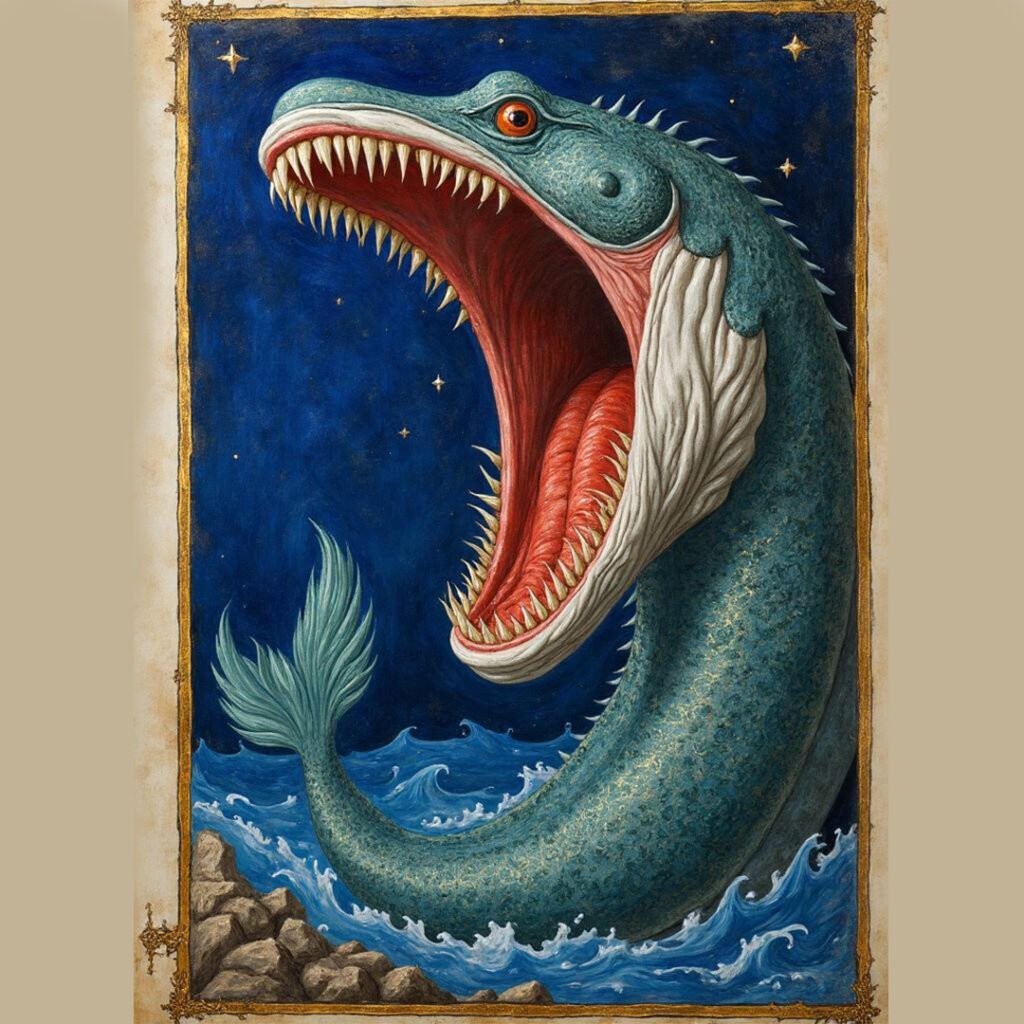
The Winchester Psalter’s Leviathan represents the apogee of English Romanesque demonic imagery. The creature functions simultaneously as demon, location, and cosmic principle—the mouth of Hell itself rendered as living entity.
The scale is deliberately disorienting: human figures tumble into jaws that seem to expand beyond the folio’s borders. This visual strategy emphasizes the theological concept of Hell as boundless despite its apparent containment. The lapis lazuli backgrounds, imported at enormous expense from Afghan mines, create ironic beauty surrounding damnation.
Anatomical details reveal careful study of natural history: the overlapping scales follow fish anatomy while the dentition suggests canine predation. This synthesis of observed nature with supernatural concept exemplifies the Romanesque approach to the monstrous.